Best year, beaten.
Malta's biggest bookshop, fifteen shops and 1.2 million titles online. A fractional Head of Ecommerce seat and a Shopify Plus replatform, installed and running. This is what it changed.
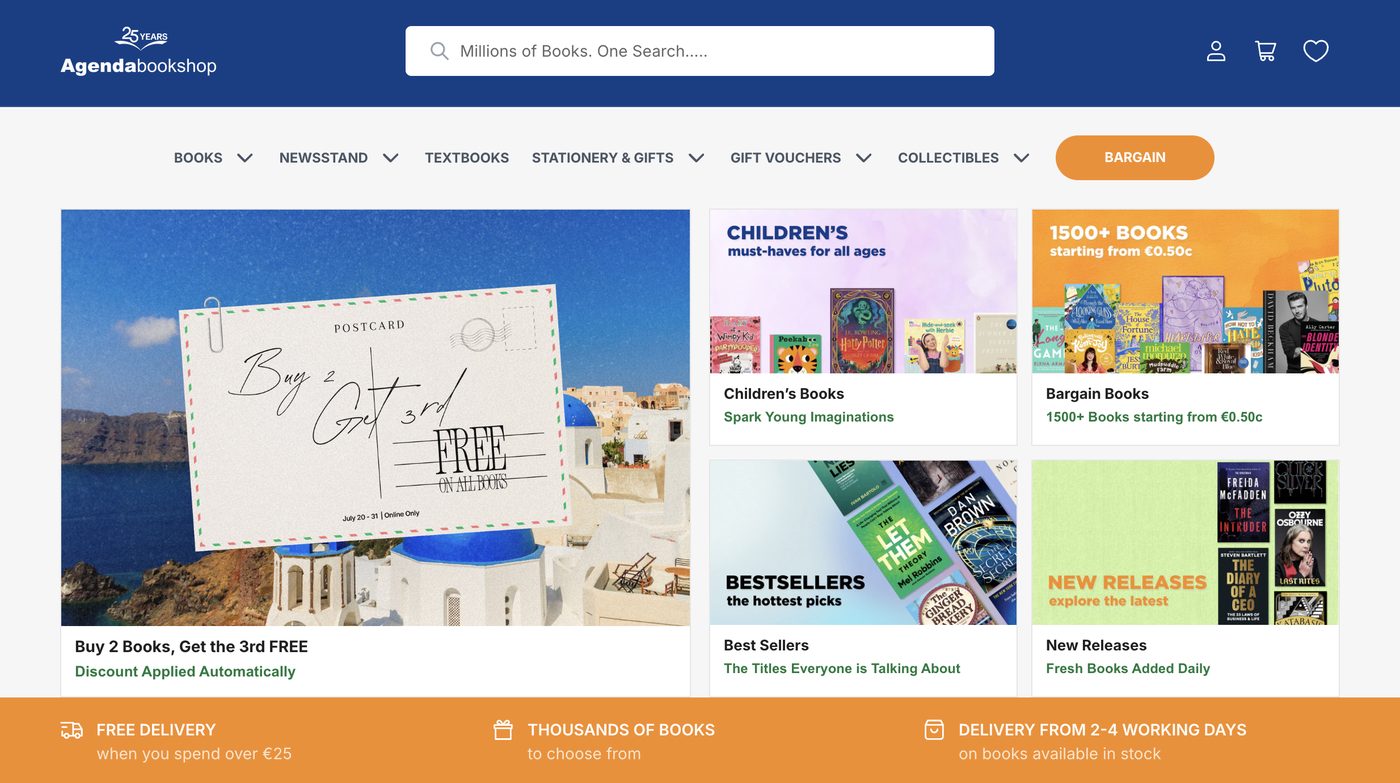
The situation.
When Frontleft took the seat, the online store was being run by a marketing executive alongside everything else on their plate. The architecture underneath was a mess: a catalogue that size overwhelmed the platform, so product data, pricing and stock crawled onto the site late. There was no marketing team, and ads were bought without a plan. Retention didn't exist; a customer's first order was usually the last anyone did anything about.
Above all, there was no reporting structure. On any given day, nobody could say whether the store was having a good week or a bad one. The store made money. Nobody could see where, or how much was being left behind.
What got installed.
The audit and sequenced roadmap. Every part of the operation scored against a fixed standard: platform, data, acquisition, retention, team, reporting. The scores made the first priority obvious. The foundation itself.
A rebuilt foundation, directed from the seat. We directed the replatform to Shopify Plus with our development team: new middleware harmonising the ERP and the Nielsen book feed, search and filtering that could carry a million-title catalogue, and a redesign built for conversion.
Reporting and the weekly rhythm. Performance visible daily instead of never, and a weekly rhythm where every person reports on their own area. Issues get spotted the week they appear, and remedies go in while the problem is still small.
A CRO programme. A standing test-and-improve cycle the team executes: hypotheses from the data, changes shipped, results read honestly.
Retention engines. Email flows and retargeting running for the first time in the company's history, squeezing lifetime value out of customers the old store simply let go.
The team itself. Hiring, done slowly and in line with need. Today there are specialists optimising every area of the store instead of one person carrying all of it.
The numbers.
Net sales above the best year in the company's history before the engagement.
Conversion rate, against that same best year.
Average order value, against that same best year.
“Matthias runs our online business like it's his own. He rebuilt the foundations, gave every area an owner, and we beat the best year in our history. Nothing surprises us anymore — the rhythm he installed catches everything early.”Emma Sullivan, CEO, Agenda Bookshop
What stayed.
The system runs whether we're in the room or not. Specialists own their areas. The retention engines compound quietly in the background. The weekly rhythm keeps every number attached to a person, and problems surface while they're still small. That's the difference between a project and a department, and the department is theirs.
Let's talk about your store.
Thirty minutes, straight to calendar. Worst case, you leave with a sharper read on your own store.